Let’s be honest: setting up a Google Ads campaign, walking away, and hoping for the best is a massively expensive mistake.
We see it all the time at digi06.com. A business owner gets excited, builds a few ad groups, plugs in their credit card, and leaves the campaign to run entirely on ‘smart’ automation. A month later, they open their dashboard only to realize they spent thousands of dollars for a flood of junk clicks and barely any actual revenue. Naturally, they blame the platform and decide paid search doesn’t work for their industry.
The truth is that Google Ads works incredibly well—but only if you treat it like a live, volatile auction, not a set-it-and-forget-it vending machine. To get a real return on your investment, you need aggressive, daily optimization based on what your competitors are doing in real-time.
The Reality of the Daily Auction
The Google Ads ecosystem changes by the hour. Your competitors aren’t sitting still; they are constantly shifting budgets, testing new hooks, and adjusting their keyword bids to outrank you. If you only look at your account once a week or once a month, you are flying completely blind.
Daily optimization lets you spot immediate opportunities that algorithms often miss. For example, if a major local rival exhausts their daily budget by 2:00 PM, their ads drop off the page. If you are monitoring your account daily, you can instantly capitalize on that gap—snapping up high-intent search traffic when clicks are cheaper, and competition is low. On the flip side, if a competitor suddenly starts aggressively outbidding you on your core terms, daily adjustments allow you to pivot your budget to secondary, highly profitable keywords before a massive chunk of your change is wasted.
The Core Blind Spots of Google Ads AI
Google pushes its machine learning and automated campaign types heavily. While automation is great for processing billions of data points, it fundamentally lacks the human business context that you—and an experienced team—possess.
- AI doesn’t know who your actual rivals are: Google’s algorithms look at abstract data clusters, not local business realities. The system doesn’t understand that a specific competitor down the street is actively trying to poach your client base, or that outranking that specific brand is vital for your market positioning.
- AI doesn’t care about your pocket size: An algorithm’s primary job is to spend your budget to hit a specific platform metric (like maximizing clicks). It doesn’t care about your real-world cash flow constraints or inventory levels. It will happily burn through your daily budget in a couple of hours if it sees high search volume, leaving your business completely dark for the rest of the day.
- AI doesn’t understand your highest-value audience: Machine learning looks at conversions on paper, but it doesn’t see your backend revenue. It might generate fifty cheap leads that never actually buy anything. A human manager can look at that data, realize those leads are junk, and manually shift the budget to a smaller, tighter audience that actually drives business growth.
Managing the Tightrope of a Limited Budget
A poorly monitored Google Ads campaign can drain your bank account faster than almost any other marketing channel. If you leave broad match keywords unmanaged or ignore your negative keyword lists, Google will waste your money on completely irrelevant searches—like people looking for jobs, free templates, or entirely different products.
However, when you groom a campaign daily, a limited budget becomes incredibly efficient. By constantly cutting away the keywords that don’t convert, tweaking your ad schedules to show up only when your sales team is awake, and refining your geographic targeting, you ensure that every single dollar goes toward high-intent users. You don’t need a massive budget to win; you just need a cleaner, sharper, and more disciplined campaign than the guy next door.
Ads Don’t Work in a Vacuum: The Power of SEO and Social
Getting someone to click your ad is only half the battle. Once they click, they leave Google and land on your website. This is where any missing link in your broader strategy will cost you money.
Your paid ads need a well-defined strategy that runs parallel with your SEO and social media efforts:
- The SEO Link: If you pay for an ad click, but your landing page takes forever to load, feels clunky on mobile, or has broken layouts, the user will leave immediately. Technical SEO foundations—like site speed, mobile optimization, and clean page structures—directly improve your Google Ads “Quality Score.” A higher Quality Score means Google rewards you with better ad placements and lower costs per click.
- The Social Media Link: Modern consumers are highly skeptical. When someone clicks your ad and sees a service they like, they rarely buy on the spot. Often, they will open a new tab and check your Instagram, Facebook, or LinkedIn to see if you are a real, legitimate business. If your social profiles look abandoned, you instantly lose their trust, and that paid click goes completely to waste.
Before anyone enters their credit card information or fills out a high-value contact form, they do a quick reputation check. They will look up your brand name alongside the word “reviews.”
The “One Strike” Rule of Digital Marketing
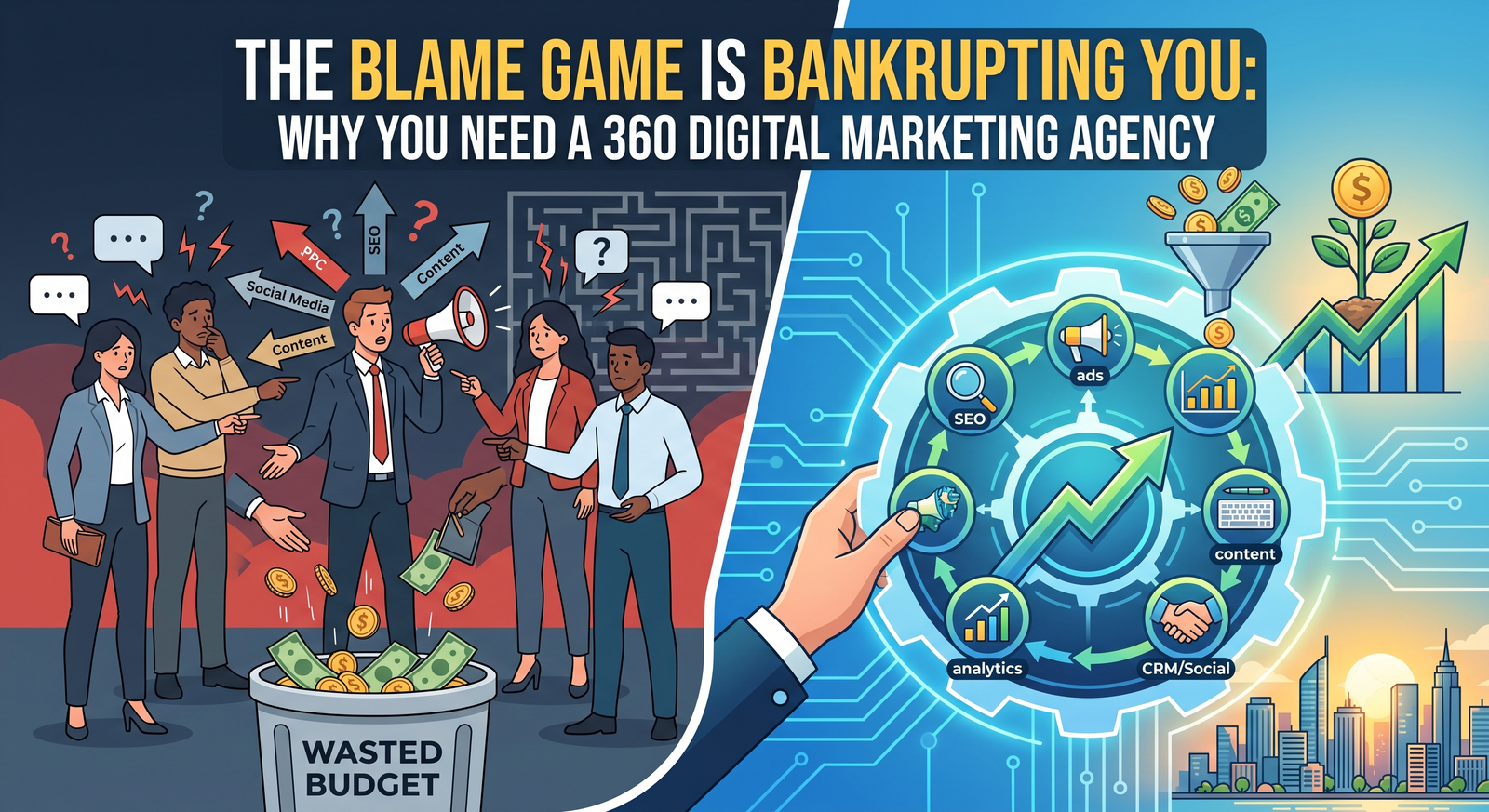
The biggest takeaway here is that digital marketing is an interconnected ecosystem. Every channel relies on the others to push a prospect across the finish line. If there is a single broken link—whether it’s a poorly optimized ad, a slow landing page, dead social media accounts, or bad reviews—your entire conversion rate suffers.
This matters because, online, users generally do not come back. Internet users have zero patience and infinite options. If they have a subpar or confusing experience with your brand on their first visit, they will click the back button, head to a competitor, and forget you ever existed. You rarely get a second chance to convert a paid click.
At digi06, we don’t just launch ads and hope for the best. We build and maintain the entire marketing chain, ensuring that from the moment a user sees your ad to the moment they check your reviews, every single touchpoint is flawless.